An Example of Paine's writing and inspiration for the true 13th Amendment:
The following is a short sample of Thomas Paine's writing that is less accessible than his earlier work. It was written on the 1805 anniversary of the 1788 ratification of the Constitution (approved by Congress, 17 Sept. 1787) and attached to his August 1805 letter on constitutional reform "To the Citizens of Pennsylvania on the Proposal for Calling a Convention." The version below came from Daniel Wheeler's 10-volume collection on the Life and Writings of Thomas Paine (1908), website above. We selected it, because this item probably inspired the passage of the true 13th Amendment by an overwhelming vote of Congress (Senate: 26 to 1 on 27 April, House affirmed 87 to 3 on 1 May 1810). It can be called the Title of Honor Amendment (TOHA) and directed against the threat of American aristocracy, mainly by pro-British esquires. TOHA went to the States for ratification and probably was (including PA. 6 Feb. 1812). The War of 1812 and British burning of Washington (24 Aug. 1814) confused Virginia's ratification until 1819. Then it was published for over forty years.
It was later erased by the esquires. The mechanics of its removalbeyond the scope of this page but it involved Supreme Court judges and the expansive desires of Southern aristocracy. It was replaced by another 13th ("Corwin") Amendment in March 1861 by the same sort that gave us the Dred Scott decision (1857). The current 13th Amendment, of 1861, permits slavery, a term that did not previously appear in the Constitution. It reads: Neither slavery nor involuntary servitude, except as a punishment for crime whereof the party shall have been duly convicted, shall exist within the United States, or any place subject to their jurisdistion. This eventually empowered lawyers to "duly convict" someone beyond the scope of the Constitution. Now we have a fourth of the world's prison population with most of it "enslaved" without jury trial or by laws that are entirely unconstitutional. The current 13th Amendment was partly a bright, shining lie meant to replace TOHA and if any such addition was needed at all, perhaps for emphasis, then it belonged within the context of the 14th Amendment.
In fact, the 14th Amendment was clear enough in abolishing slavery, without the 13th. Even so, the esquires eventually (after 1886) managed to abuse both and empower the master class of a new aristocracy and the phoney money printed by their banksters. This goes beyond the scope here, but it should be obvious that granting undue honor or privilege creates aristocracy. In effect, the mechanism of "corporate personhood", which was added to a Supreme Court decision (after the death of the deciding judge) by a law clerk who had worked for the railroad, helped politicians/judges become enslaving lawmakers, rather than true lawkeepers. The elected lawmakers need public approval for amendments, Judges who assume undue honor can simply ignore juries or popular will. Again, master and slave are two sides of the same coin.
Slavery is the legal fiction that human persons are property. Corporatism is the legal fiction that property is personhood.
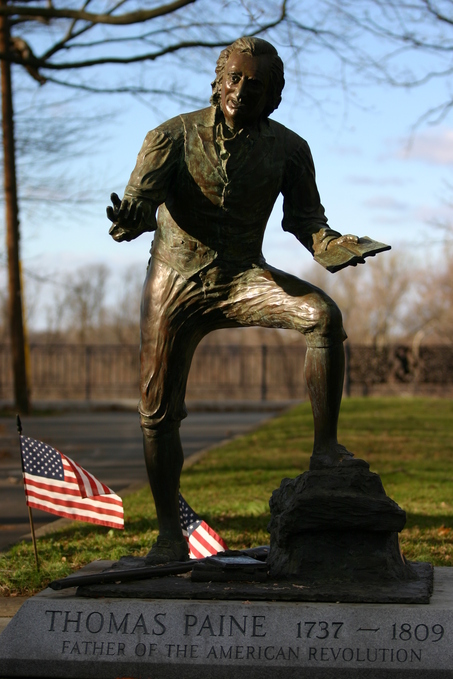
Thomas Paine spent his life making clear how aristocracy is the historic enemy of democracy. For that reason we feel that this Compass, and the August letter to which it was attached, were over 200 years ahead of their time. He exposed the "judicial review" fraud. Meanwhile the Pennsylvania legislature and its judiciary is probably more corrupt today than it was in 1805. Neither do the so-called Public (corporate) Schools emphasize teaching the Constitution, even as Civics, much less TOHA or the original 1st Amendment in the Bill of Rights, wherein the founders defined the proper ratio for democracy. Both are discussed in later pages.
Compass on Constitutions, Governments, and Charters (1805)
The people of Pennsylvania are, at this time, earnestly occupied on the subject of calling a convention to revise their State Constitution, and there can be but little doubt that a revision is necessary. It is a Constitution, they say, for the emolument of lawyers.
It has happened that the constitutions of all the states were formed before any experience had been had on the representative system of government; and it would be a miracle in human affairs that mere theory without experience should start in perfection at once. The Constitution of New York was formed so early as 1777.
The subject that occupied and engrossed the public mind at that time was the Revolutionary War, and the establishment of independence, and in order to give effect to the Declaration of Independence by Congress it was necessary that the states severally should make a practical beginning by establishing state constitutions, and trust to time and experience for improvement. The general defect in all the constitutions is that they are modeled too much after the system, if it can be called a system, of the English Government, which in practise is the most corrupt system in existence, for it is corruption systematized.
An idea also generally prevailed at that time of keeping what were called the legislative, the executive, and the judicial powers distinct and separated from each other. But this idea whether correct or not, is always contradicted in practise; for where the consent of a governor or executive is required to an act before it can become a law, or where he can by his negative prevent an act of the legislature becoming a law, he is effectually a part of the legislature, and possesses full half of the powers of a whole legislature.
[Paragraph on New York ommited.]
When we see maxims that fail in practise, we ought to go to the root, and see if the maxim be true. Now it does not signify how many nominal divisions, and subdivisions, and classifications we make, for the fact is, there are but two powers in any government, the power of willing or enacting the laws, and the power of executing them; for what is called the judiciary is a branch of executive power; it executes the laws; and what is called the executive is a superintending power to see that the laws are executed.
Errors in theory are, sooner or later, accompanied with errors in practise; and this leads me to another part of the subject, that of considering a constitution and a government relatively to each other.
A constitution is the act of the people in their original character of sovereignty. A government is a creature of the constitution; it is produced and brought into existence by it. A constitution defines and limits the powers of the government it creates. It therefore follows, as a natural and also a logical result, that the governmental exercise of any power not authorized by the constitution is an assumed power, and therefore illegal.
There is no article in the Constitution of this State, nor of any of the states, that invests the Government in whole or in part with the power of granting charters or monopolies of any kind; the spirit of the times was then against all such speculation; and therefore the assuming to grant them is unconstitutional, and when obtained by bribery and corruption is criminal. It is also contrary to the intention and principle of annual elections.
Legislatures are elected annually, not only for the purpose of giving the people, in their elective character, the opportunity of showing their approbation of those who have acted right, by reelecting them, and rejecting those who have acted wrong; but also for the purpose of correcting the wrong (where any wrong has been done) of a former legislature. But the very intention, essence, and principle of annual election would be destroyed, if any one legislature during the year of its authority, had the power to place any of its acts beyond the reach of succeeding legislatures; yet this is always attempted to be done in those acts of a legislature called charters.
Of what use is it to dismiss legislators for having done wrong, if the wrong is to continue on the authority of those who did it? Thus much for things that are wrong. I now come to speak of things that are right, and may be necessary.
Experience shows that matters will occasionally arise, especially in a new country, that will require the exercise of a power differently constituted to that of ordinary legislation; and therefore there ought to be in a constitution an article, defining how that power shall be constituted and exercised. Perhaps the simplest method, that which I am going to mention, is the best; because it is still keeping strictly within the limits of annual elections, makes no new appointments necessary, and creates no additional expense. For example,
That all matters of a different quality to matters of ordinary legislation, such, for instance, as sales or grants of public lands, acts of incorporation, public contracts with individuals or companies beyond a certain amount; shall be proposed in one legislature, and published in the form of a bill, with the yeas and nays, after the second reading, and in that state shall lie over to be taken up by the succeeding legislature; that is, there shall always be, on all such matters, one annual election [which] takes place between the time of bringing in the bill and the time of enacting it into a permanent law.
It is the rapidity with which a self-interested speculation, or a fraud on the public property, can be carried through within the short space of one session, and before the people can be apprised of it, that renders it necessary that a precaution of this kind, unless a better can be devised, should be made an article of the Constitution.
Had such an article been originally in the Constitution, the bribery and corruption employed to seduce and manage the members of the late Legislature, in the affair of the Merchants' Bank, could not have taken place. It would not have been worth while to bribe men to do what they had not the power of doing. The Legislature could only have proposed, but not have enacted the law; and the election then ensuing would, by discarding the proposers, have negatived the proposal without any further trouble.
This method has the appearancce of doubling the value and importance of annual elections. It is only by means of elections that the mind of the public can be collected to a point on any important subject; and as it is always the interest of a much greater number of people in a country, to have a thing right than to have it wrong, the public sentiment is always worth attending to. It may sometimes err, but never intentionally, and never long.
The experiment of the Merchants' Bank showed it is impossible to bribe a small body of men, but it is always impossible to bribe a whole nation; and therefore in all legislative matters that by requiring permanency differ from ordinary legislation, which are alterable or repealable at all times, it is safest that they pass through two legislatures, and a general election intervene between. The elections will always bring up the mind of the country on any important proposed bill; and thus the whole state will be its own Council of Revision. It has already passed its veto on the Merchants' Bank bill, notwithstanding that the minor Council of Revision approved it.
COMMON SENSE.
(June 21, 1805)
Finally, some video presentations.
These are linked to YouTube and are sometimes slow to load. If you triple-click then you can view them directly at the YouTube site. If it is still a slow run then just note their address and go directly to YouTube after you exit our site.
He landed in Philadelphia as a tired and poor immigrant (30 Nov.1774) with a letter of introduction by Benjamin Franklin, who later wrote to him:
“You Thomas Paine, are more responsible than any other living person on this continent for the creation of what we call the United States of America".
He anonymously published A Serious Thought (18 Oct.1775) suggesting that God would grant American independence. It went well beyond the July
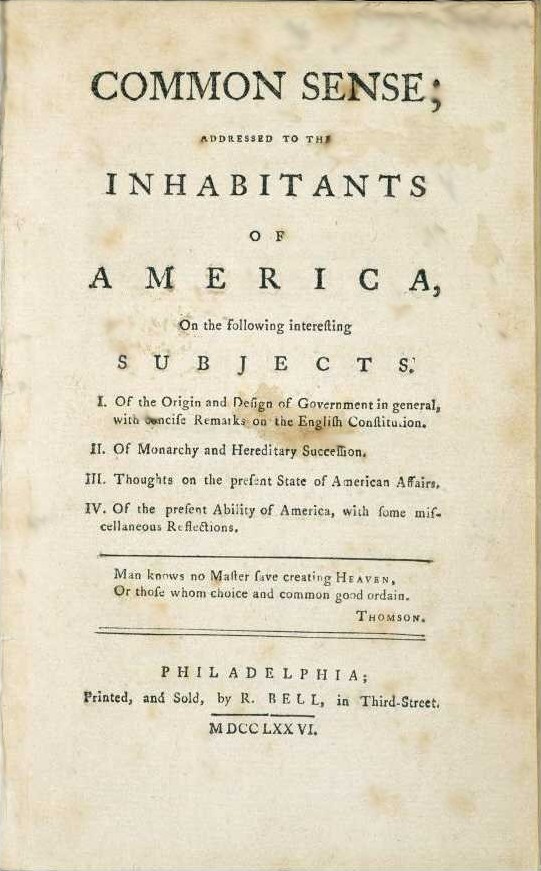
1775 Declaration for Taking Up Arms and - at the suggestion of Benjamin Rush - led to his famously powerful Common Sense (10 Jan.1776). It
transformed a successful revolution (by Dec. 1775) into a War for Independence and announced a constitution as the Genesis of our values:
"Yet that we may not appear to be defective even in earthly honors, let a day be solemnly set apart for proclaiming the charter; let it be brought forth, placed on the divine
law, the Word of God; let a crown be placed thereon, by which the world may know, that so far as we approve of monarchy, that in America the law is king ...and there
ought to be no other." It proclaimed "We have it in our power to begin the world over again …the birthday of a new world is at hand..." and warned against
reconciliation with "...Interested men, who are not to be trusted; weak men who cannot see; prejudiced men who will not see; and a certain set of moderate men, who
think better of the European world than it deserves". It concluded with "... free and independent states of America" (more fully explained later in Crises No. 13).
He helped construct the Declaration of Independence for Congress (for committee with Braxton, Middleton, and Jefferson), and unequivocally promoted
emancipating slaves, as in newspaper essays like "African Slavery in America" (8 March & 18 Oct.1775), and introduced a strong phrase against
slavery to the Declaration, calling it “cruel war against human Nature itself,” that violated “a distant people... captivating and carrying them
into slavery in another hemisphere.” The slave colonies had this removed from Jefferson's copy, thereby creating an issue for a future Civil War.
He took a musket to join a Pennsylvania Militia under Nathanael Greene, fought in Washington's rear guard, inspired victory and fought at Trenton,
shared hardships at Valley Forge, and reconnoitered Fort Mifflin under fire. His words against tyranny are now famous. With other patriots, he
risked “...our Lives, our Fortunes, and our sacred Honor.” and thereby earned the rank of major in the Continental Army.
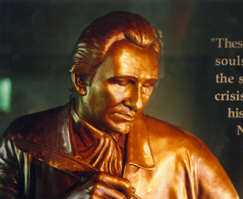
He wrote Crises dispatches to rally troops and explain American values. For example, Crises I to Washington's troops on Christmas Eve, 1776, began: "These are the times that try men's souls. The summer soldier and the sunshine patriot will, in this crises, shrink from the service of his country; but
he that stands it now deserves the love of man and woman. Tyranny like hell, is not easily conquered yet we have this consolation with us, that the
harder the conflict, the more glorious the triumph." Troops at the edge of going home were thus repeatedly inspired to endure another battle.
He called Native Americans "brothers" and admired their relative equality and freedom from proverty. He praised their love of liberty as symbolized by the
eagle, which helped in making it the national emblem. With a thousand dollars worth of presents he negotiated a Treaty at Easton (Jan.1777) with
allies of the Iroquois nations. If the British had not undermined it, relations with the original Americans would have been much better after 1783.
He continued the Crisis dispatches. No. 2 responds to Lord Howe’s proposal to settle the war and No. 3 (1977) reviews American progress in the
struggle. After the Battle of Brandywine -- and British occupation of Philadelphia -- he addresses No. 7 (1778) to the people of England.
He became secretary to the Committee for Foreign Affairs (April 1777) and promoted the United States of America. Franklin said: "Others can rule,
many can fight, but only Thomas Paine can write for us in the English Tongue."
He exposed private arms-dealing in an “affair of Silas Deane” (1778) he was forced to resign this position in order to avoid French embarrassment.
He served as Clerk of the Pennsylvania assembly (1779-81) and wrote a Preamble Emancipation of Slaves Act of 1 March 1780, making it the
first state to end this color-based form of serfdom. If Virginia had taken a similar step, then the 1861 Civil War might have been avoided.
He wrote an essay on Public Good (1780) to oppose Virginia's claim on frontier lands for the sake of national unity . This angered some Virginia
landowners. Added to his stance against slavery, this influenced southern politicians to deny him a pension and other future positions.
He received a Master of Arts degree from the University of Philadelphia (4 July 1780) and was accepted in the American Philosophical Society.
He gave a third of his salary to feed Washington's troops and initiated a mission to France (March 1781) with John Laurens. There, he helped
negotiate a large loan and then escorted 2.5 million livres in silver (Aug.1781) back to America to help pay the troops and win the war.
He wrote a Letter on Affairs of North America (1782) to help define the Treaty of Paris. It corrected Abbe Raynal’s version and lessened war debts.
He helped Franklin form an Articles of Confederation government and A Supernumerary Crisis and Memo (1783) urged closer union among the states.
Dissertations On Government; Affairs of the Bank; and Paper Money (early 1786); outlined an agenda for the 1787 Constitutional Convention.
He was technically gifted and invented an iron bridge; then built a working model after traveling back to England (April-Aug. 1787) to visit his parents,
He had promoted women's equality since 1775 with "An Occasional Letter On The Female Sex" and, while in London, shared ideas with Mary
Wollstonecraft (1759-1797), who wrote Vindication of the Rights of Men (Dec. 1790) and more famous Vindication of the Rights of Women
(1792). If such views had been adopted in America then women would have had the right to vote as part of the Bill of Rights Constitution.
He inspired the Revolution in France, with friendship of both Thomas Jefferson and the wealthy LaFayette. His writings were "as powerful as an
army" against European despotism. French publishers bound translations of Common Sense into one volume with Rousseau's Social Contract.
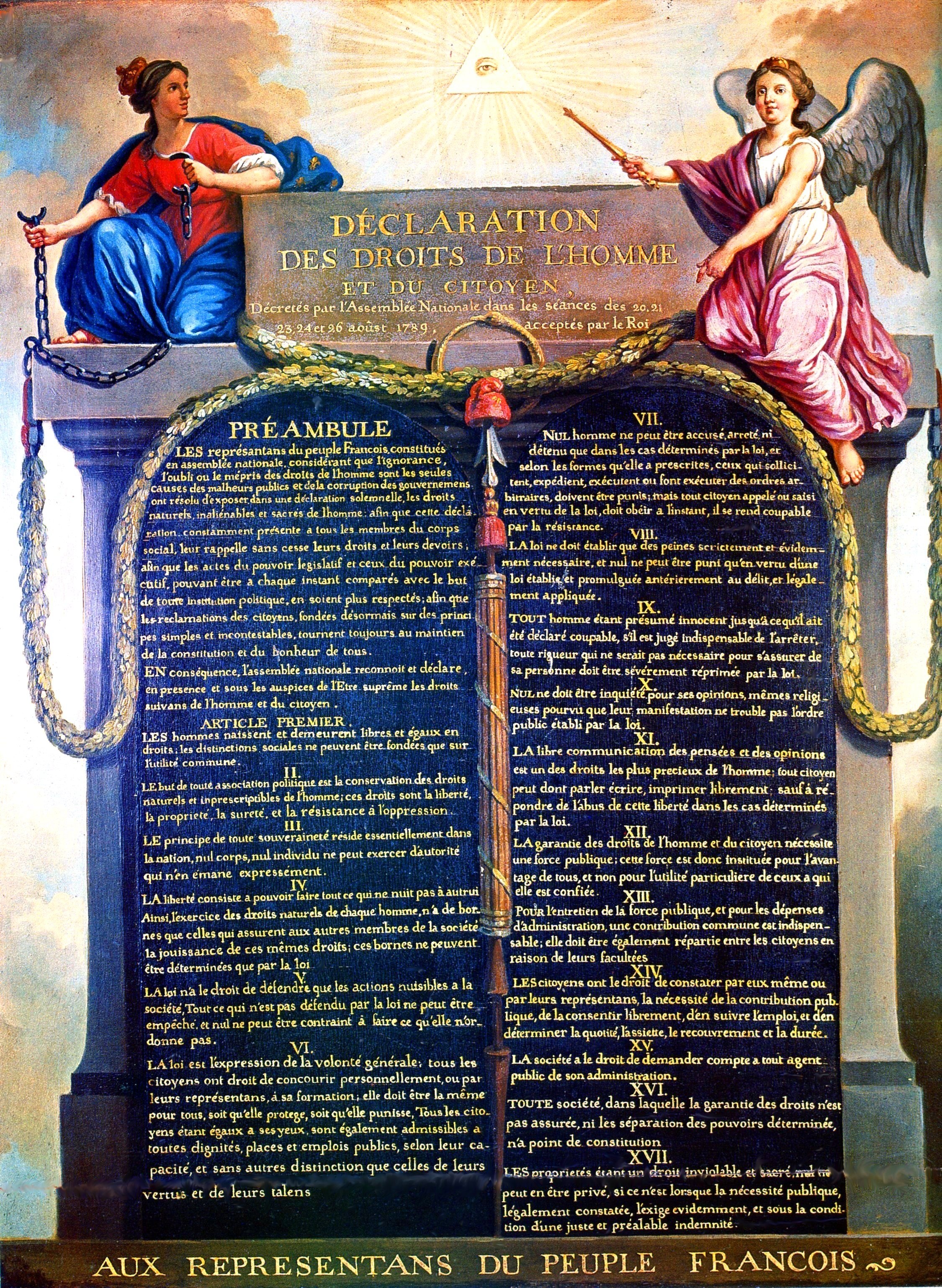
He advocated human rights in France and, with Jefferson, helped inspire the France's 1789 Declaration of the Rights of Man and Citizen, which he
popularized in Rights of Man (Part I, Feb. 1791, dedicated to Washington). Its promotion of "universal civilization" opposed Edmund Burke's attack
on a still moderate French Revolution. It did not yet denounce England’s “Foxite” aristocracy but its republican ideals inspired the second written
Constitution in Poland (3 May 1791), which shook European feudalism and threatened the Austrian, Prussian, Russian, and Hanoverian monarchy.
He exchanged ideas (1791) in England with visitors such as Joel Barlow, Thomas Christie, Lord Edward Fitzgerald, William Goodwin, John
Oswald, Joseph Priestley, Clio Rickman, William Sharpe, Horne Tooke, and Mrs.Wollstonecraft to examine how republicanism could replace
misdirected radicalism. In Paris, as Louis XVI deserted (20 June), he circulated A Republican Manifesto (June-July 1791) and formed a
Societe Republicaine with Bonneville, Condorcet, and others who had similar ideals.
He noted in "Address and Declaration to the Friends of Universal Peace and Liberty" that: "We fear not proud oppression, for we have truth on our
side" (Aug. 1791). Such statements inspired English and Irish committees of correspondence to form a Society for Constitutional Information. It
spread the idea of republicanism as synonymous to ‘democracy' throughout the British Empire.Poet William Blake warned him of impending arrest.
He published Rights of Man, Part II (dedicated to Lafayette, Feb. 1792), and returned to Britain to spread its republican ideals and democracy.
He barely escaped impending arrest (15 Sept. 1792) thanks to poet William Blake’s warning, except that a customs official recognized his near-diplomatic
status. Meanwhile King George issued a “Proclamation against Sedition, Subversion, and Riot” as the new book became the most popular work of
the English language. It meant that he and other republicans were named “radicals” and accused of “treason against the crown.” A bribed court found
him guilty (Dec. 1792) in absentia, but his publishers were not as lucky and went to prison for 3 years. Similar royalist sentiment arose in America.
He received a hero’s welcome in France and voted to be a Deputy of France in four Departments (Sept.1792), he chose to represent Calais as an
honorary Frenchman (Washington, Madison, Barlow, Kościuszko were similarly honored, and Franklin & Jefferson could claim naturalized citizen
status in France) for the purpose of writing a Constitution, which had been delayed by the treason of King Louis XVI (June 1791 - Aug. 1792).
He first exposed the myth of England’s “living constitution” in defining the French model. For example, Rights of Man, Part I stressed that it must have...
"... a real existence; and wherever it cannot be produced in a visible form, there is none. A constitution is a thing antecedent to a government, and a government is only the
creature of a constitution. The constitution of a country is not the act of its government, but of the people constituting its government. It is the body of elements, to which
you can refer, and quote article by article; and which contains the principles on which the government shall be established, the manner in which it shall be organized, the
powers it shall have, the mode of elections, the duration of Parliaments, or by what other name such bodies may be called; the powers which the executive part of the
government shall have; and, in fine, everything that relates to the complete organization of a civil government, and the principles on which it shall act, and by which it
shall be bound. A constitution, therefore, is to a government what the laws made a afterwards by that government are to a court of judicature. The court of judicature does
not make laws, neither can it alter them; it only acts in conformity to the laws made: and the government is in like manner governed by the constitution.
He helped Condorcet (& 6 others) present a Girondin constitutional proposal (Feb. 15-16). It led to the highly endorsed French Constitution of June 1793.
He staunchly resisted French terrorism because it undermined republican ideals. For example, he pleaded (15 Jan.1793) for the French Assembly to spare
Louis XVI despite his treason -- “Kill the tyrant, spare the man” but the death vote was 387 to 334 (17 Jan.) and efforts for a reprieve failed over the
next three days. If the former American benefactor were banished, as Paine wanted, then Anglo-German royalty might have become tolerant enough
of republicanism to recall their invasions of France. The Reign of Terror and subsequent rise of Napoleon might have been avoided.
He was denounced by a Committee of Public Safety (Oct. 1793) and imprisoned (28 Dec.) Age of Reason (Part 1, 1794) was gathered by Joel Barlow
while Paine faced execution (Robespierre signed the death warrant.), It attacked atheism, materialism, and religious corruption. This textbook for
Deism included an idea of judgment day and an afterlife. It aimed to create a moral anchor matching the Reformation. It was dedicated to "fellow
citizens" in America. Jefferson was sent a copy and added a political preface that further incited a Federalist reaction against Paine.
He was saved by Robespierre’s overthrow (27 July 1794) and resided with fellow war veteran Monroe (to Nov.1796) and continued to emphasize
republican values such as universal suffrage in First Principles of Government (July 1795) His dissertation noted a return to despotism because
"in the absence of a constitution, men look entirely to party; and instead of principle governing party, party governs principle."
He foresaw government brutality in the arbitrary return to colonial slavery and an apparent the rush to torture:
The executive is not invested with the power of deliberating whether it shall act or not; it has no discretionary authority in the case; for it can act no other thing than
what the laws decree,.... [&] An avidity to punish is always dangerous to liberty. It leads men to stretch, to misinterpret, and to misapply even the best of laws. He that
would make his own liberty secure must guard even his enemy from oppression; for if he violates this duty he establishes a precedent that will reach to himself.
He dined with prominent men such as Barlow, Condorcet, Fulton, LaFayette, Kosciuszko, and Napoleon (1797), who said that Paine deserved golden
statues for Rights of Man and that he slept with a copy at his side. Napoleon even consulted Paine on strategic issues in England and America. For
example he helped in planning Irish liberation (1796-98) to support ex-lord Ed Fitzgerald, Wolfe Tone and Napper Tandy. American help might
have freed Ireland. Wolfe Tone had said (1791 Manifesto): "The Rights of Man are the Rights of God, to vindicate the one is to maintain the other."
He rejected the patronizing Christian hypocrisy of the bishop of Llandaff and wrote Agrarian Justice (1796) to promote social protection laws and other
reforms. It included a “social security” system based on progressive taxation. It describes the earth as "the common property of the human race."
and notes the relative absence of poverty among indigenous tribes of North America but its insight on equal rights stopped short of class conflict.
He served as unofficial ambassador to France after Monroe (Pickney was rejected as ambassador) and helped Vice-President Jefferson avoid war by
exposing Anglo-Federalist schemes. By 1800, he drafted principles for international arbitration and published specific measures to reduce militarism
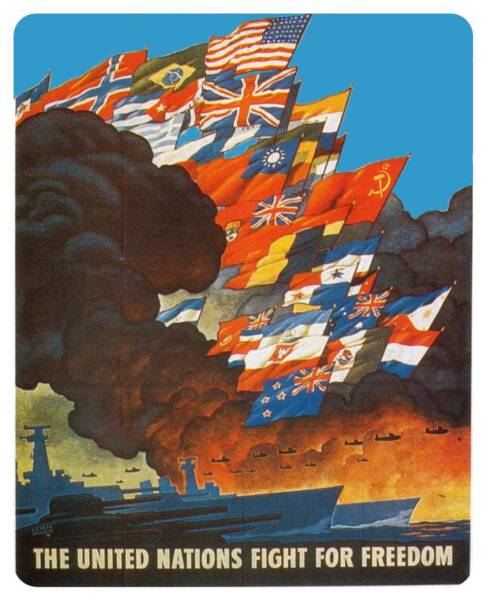
in a 40-page Maritime Compact (1800) that proposed a "Law of Nations" for a neutral Association of Nations united under the Rainbow Flag.
If British sympathizers had not assassinated Czar Paul I (1801), this early "United Nations" might have ended the Napoleonic Wars and it did help
in a negotiated peace (1802). Paine was safely escorted back to America aboard the man-of-war Maryland and was President Jefferson's guest.
He wrote a “New Sun” Letter (25 Dec.1802), making “a present of a thought” to Jefferson on how to peacefully acquire Louisiana territories. Within
weeks, Jefferson wrote back and Paine began "sub-silentio” planning with Monroe (10-13 Jan.1803) to exploit French problems.
He briefed negotiating suggestions to Monroe on his departure to France (March 1803) and for fifteen million dollars the Louisiana Purchase doubled
America's size (May-Dec.1803). As a slave insurrection forced Napoleon out of the Caribbean (Haiti). Paine’s diplomacy was continued by his
friend Joel Barlow, another "honorary French citizen”, who affirmed an informal French alliance. The “Second War of Independence” would have
ended differently if Anglo-Hanoverian armies were not enmeshed in Napoleon’s “Second Polish War” (both began the third week of June 1812).
He exchanged ideas with Sam Adams who wrote that Common Sense and Crises had inspired national independence, adding:
"Let divines and philosophers, statesmen and patriots, unite their endeavors to renovate the age by inculcating the minds of youth the fear and love
of the Deity and universal philanthropy." Paine answered "this exactly is my religion" (1 Jan. 1803).
He predicted that the Louisiana territory would eventually include a dozen states but in a Letter to the French Inhabitants of Louisiana (22 Sept. 1804)
begged that they denounce a petition for “...rights, to import and enslave Africans!” Paine asserted that as American landowners, they must uphold
the “principles and interest of a republic” and not permit slavery therein. This policy could have avoided a future Civil War.
He joined American Deists in a NY Theistic Society (1804) and wrote Prospect Papers (Age of Reason, Part 4) to conclude his views on morality (1807)
and caution against fanaticism. Never an atheist, he later ended his Will in "resignation to the will of my creator, God" (1809).
He denounced Judicial Review and “emolument of lawyers” in a ”Letter to the Citizens of Pennsylvanian” and Compass (21 June 1805), as contrary
to the principle of juries and annual election. This helped inspire the original 13th Amendment (1810) that, despite near ratification, was later subverted
by lawyers and judges. If his advice were heeded, America might not now have half the world’s prison population. One key phrase was:
"There is no article in the Constitution of this State, nor of any of the states, that invests the Government in whole or in part with the power of granting
charters or monopolies of any kind; the spirit of the times was then against all such speculation; and therefore the assuming to grant them is unconsti-
tutional, and when obtained by bribery and corruption is criminal."
He warned how enemies "unable to conquer will stoop to corrupt." If his warning about "granting charters and monopolies" (1805) were heeded
then the law-takers could not have sliced U.S. government into over 88,000 separate, unequal units dominated by chambers of corporatism.
He was a lifelong friend of Jefferson, who recalled (19 Jan. 1821) that "no writer exceeded Paine in clear, lucid expression and unassuming language."
He inspired global change. John Adams retained respect for royalism and disliked Paine's ideas, half-seriously proposed (Oct.1805) renaming the Age
of Reason as the Age of Paine because he did not know anyone else who had influenced the world affairs more for the previous thirty years.
In 1814, Adams paraphrased Joel Barlow's sympathies to write: There is but one element of government and that is THE PEOPLE," and
...Without the pen of Paine, the sword of Washington would have been wielded in vain." In an 1818 letter, Adams admitted "...a change in the
principles, opinions, sentiments, and affections of the people, was the real American Revolution."
He is largely removed from U.S. history (except for Common Sense) and an English fanatic stole his body, carried to England (1819), and lost it.
He is often dismissed as a "radical". Perhaps the best answer to detractors was in President Franklin Roosevelt's speech to the Daughters of the
American Revolution on 20 April 1938: "Remember always that all of us, and you and I especially, are descended from immigrants and revolutionists."